



The Dangers of Improper Surface Piercing Techniques
- Micaela Stephens

- Aug 11, 2025
- 2 min read
Updated: Feb 4
Understanding Surface Piercings
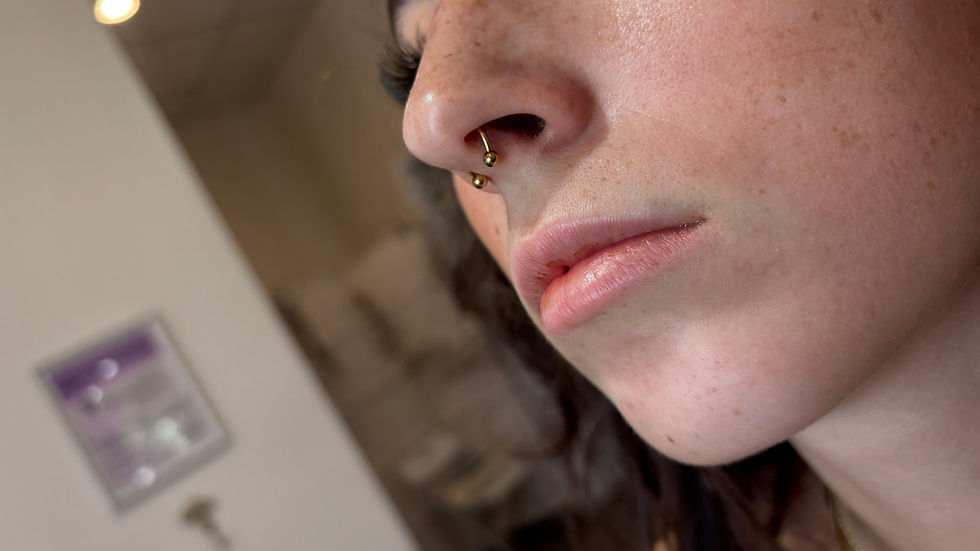
Back again for another round of discussions on piercing safety! I'm an apprentice/novice piercer who has no right trying a piercing they are not trained to do. This time, a young lady thought an anti-eyebrow surface piercing was her go-to choice for the day. Unfortunately, the medieval fool down on College who claimed he was an apprentice at the castle of hell, with no trainer in sight, decided he was the one to take on this surface piercing. Behold his handiwork:

Can we all take a collective gasp, do a little throat gulp, and feel bad for this young lady? The swelling was horrible, and I got to see her within 30 minutes of this monstrosity being performed. This is not piercing; this is mutilation with lasting scarring.
The Importance of Proper Training
I've previously written about another local piercer at Guido's Wet Dream Studio over by the mall. As I've said before, surface piercings use a specific staple bar that has 90-degree ends. You must be specially trained to perform this piercing using the correct jewelry and technique.
In the old school days, we used to do this stuff, but we have evolved as piercers and learned from our mistakes. We have created new jewelry to achieve the piercing we dreamed of. If you come across a surface piercing done in this manner, with curved barbells, RUN! Your piercer isn't experienced, can't order the correct jewelry, or has an inexperienced, not up-to-date trainer.
Recognizing Quality Piercing Techniques
Beware of castles offering you anything other than manly biker ridiculous out-of-date piercers! The correct bases for a surface piercing look like the following:


The Risks of Poor Piercing Practices
When it comes to piercings, the risks associated with improper techniques can lead to severe complications. Infections, excessive scarring, and prolonged healing times are just a few of the potential outcomes. It's crucial to choose a piercer who understands the anatomy and the correct methods for each type of piercing.
Signs of Infection
If you notice any of the following signs after getting a piercing, seek medical advice immediately:
Increased redness around the piercing site
Pus or unusual discharge
Severe swelling
Fever or chills
Healing Process
The healing process for surface piercings can be challenging. They often take longer to heal than traditional piercings. Proper aftercare is essential to ensure a smooth recovery. Clean the area regularly and avoid touching it with dirty hands.
Conclusion
In conclusion, always prioritize safety and hygiene when it comes to body piercings. If you are considering a surface piercing, ensure that you choose a reputable and experienced piercer. Remember, the right techniques and equipment can make all the difference in your piercing experience.
Stay informed and make wise choices for your body modifications!


Comments